Does your SME need an ERP? The signs that don't lie, and the ones that aren't enough, for a Belgian business.
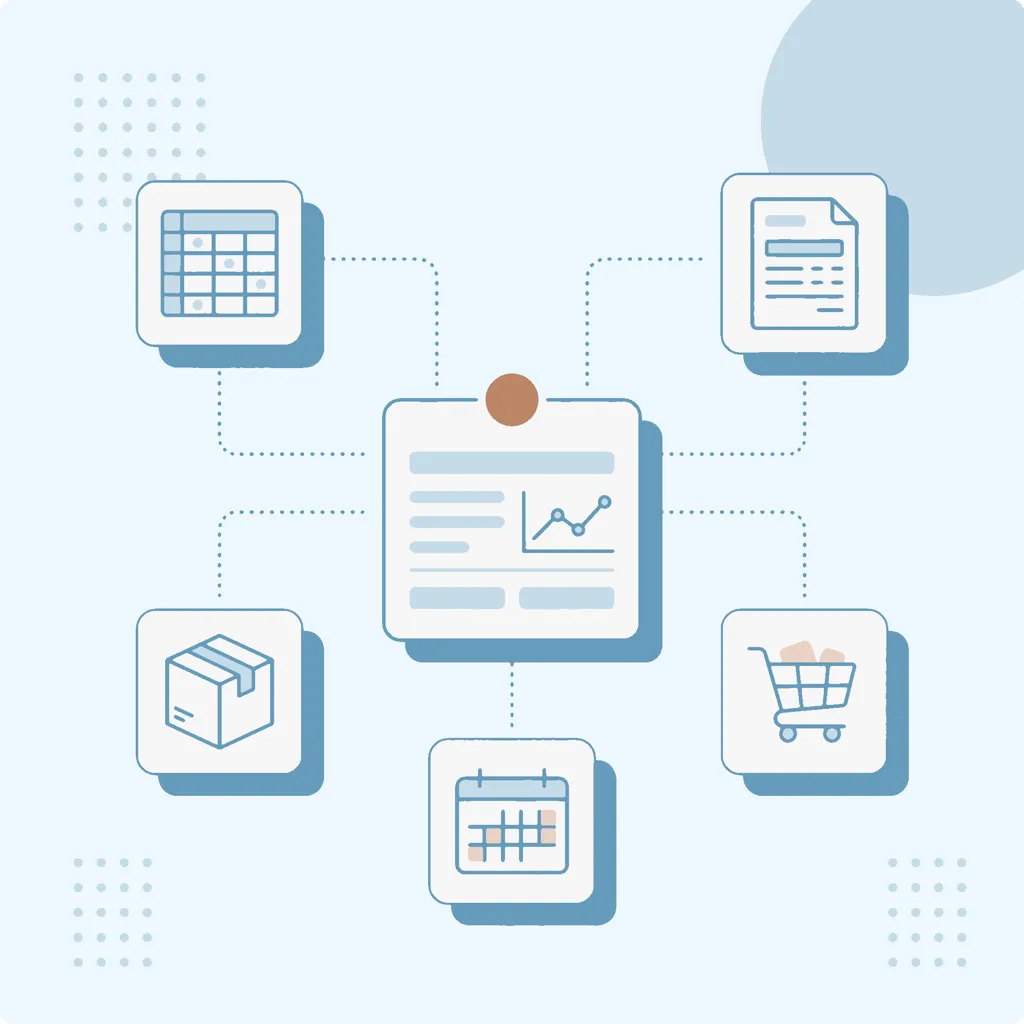
An SME needs an ERP when its separate tools cost more than a single one would: when the same data is entered two or three times, when nobody can tell the real stock level or the margin on an order without digging, and when growth hits an administrative wall rather than a sales one. Company size matters less than the number of flows that cross each other.
According to Eurostat (2025 figures published on 20 May 2026), 41% of small businesses in the Union use an ERP, against 89% of large ones. Belgium is among the best-equipped countries: 70% of Belgian businesses use at least one specialised management software (ERP, CRM or analytics tool), against an EU average of 53%.
For a Belgian SME or self-employed professional, the question has also become sharper since e-invoicing became mandatory on 1 January 2026: a tool that sends and receives Peppol invoices is not enough if everything else still lives in spreadsheets.
41% of small European businesses use an ERP, against 89% of large ones.
What an ERP really is (and what it isn't)
An ERP (Enterprise Resource Planning) brings sales, purchasing, stock, invoicing, accounting and often CRM, projects or the online shop into a single database. Its value is not in adding features: it is that information entered once is used everywhere.
The difference with invoicing software
Invoicing software produces invoices. An ERP knows where the invoice comes from: the accepted quote, the order, the delivery, the stock that moved, the purchase cost. That link is what lets you see the real margin on a customer or a product without rebuilding the figures by hand.
The difference with connected tools
You can also keep specialised tools and link them with automations. That is often the right answer when two or three tools are enough. Beyond that, every connection becomes a breaking point to monitor. We covered this in this article on connecting your tools.
The signs that don't lie
Taken one by one, these symptoms are manageable. It is when they pile up that an ERP becomes profitable.
- The same data is entered several times. A customer created in the CRM, created again in the invoicing software, then a third time at the accountant's. Every re-entry costs time and creates discrepancies.
- The stock shown is never the real stock. You sell an item you no longer have, or you reorder what is already sitting in the warehouse.
- Margins are calculated after the fact. Nobody knows whether an order was profitable before the accounts are closed, sometimes months later.
- Only one employee knows where everything is. The day they are away, quotes and deliveries wait.
- Dashboards are compiled by hand. If every month-end starts with half a day of exports, that is a clear signal (see automating your dashboards).
- Growth means hiring for admin. When every new customer requires more data entry, headcount is not the problem.
When every new customer requires more data entry, headcount is not the problem.
The signs that aren't enough
Some reasons push towards an ERP without justifying one on their own.
‘We have to switch to Peppol’
E-invoicing has been mandatory between Belgian VAT-registered businesses since 1 January 2026. According to the FPS Finance, quoted by Belga on 3 August 2026, 89% of VAT-registered businesses, or 1,059,335 companies, were already using the platform in mid-July, and around 12,000 entrepreneurs still had to register. Compatible invoicing software is enough to comply; an ERP becomes worthwhile when Peppol comes on top of the symptoms above, because incoming invoices can then feed purchasing and stock directly. The transition is detailed in this article on mandatory e-invoicing.
‘Our competitors have one’
A poorly sized ERP costs more than it brings in. The question is not what others do, but how many hours your re-entries and errors cost you every month.
‘Our current software is old’
An old tool that does its job well can stay. Replacing it with an ERP without reviewing your processes simply reproduces the same workarounds in a more expensive tool.
How long and what budget to plan
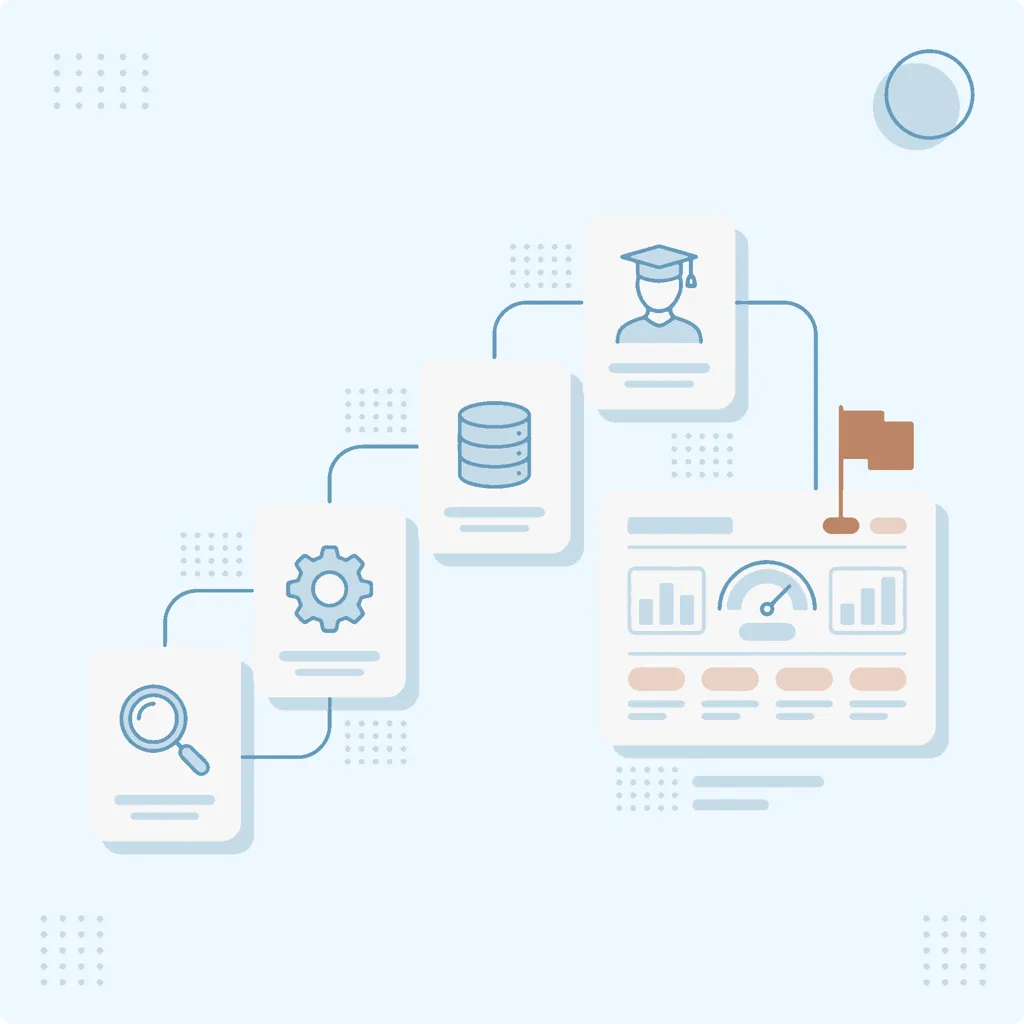
The cost of an ERP for an SME comes down to three items: licences (often per user per month), implementation (analysis, configuration, data migration, training) and support after go-live. Don't underestimate implementation: it decides whether the tool is really used, or bypassed by new spreadsheets.
Vendors are also changing their models. Odoo 20, presented in Brussels in September 2026 at Odoo Experience, for example lets you restrict ‘light’ users to the barcode module only, according to its release notes, and adds an offline mode; its AI features, on the other hand, run on separately purchased credits. Details like these weigh on the real budget: read them before signing.
As for timing, count a few weeks for a limited scope (sales, invoicing, simple stock) and several months once production, several warehouses or a large history migration come into play. The schedule depends above all on the quality of your starting data.
Frequently asked questions
From how many employees do you need an ERP?
There is no threshold. A five-person business managing stock, purchasing and an online shop can gain more from it than a thirty-person service company. The right criterion is the number of flows that cross each other.
Does an ERP replace the accountant?
No. It sends them clean, up-to-date data, which reduces the time billed for data entry. Bookkeeping, tax returns and advice remain their job.
Can you start small?
Yes, and it is often the best approach: start with sales, invoicing and stock, then add purchasing, CRM or the online shop once the team is comfortable. Modular ERPs are designed for this.
Do you need an ERP to comply with Peppol?
No. Peppol-compatible invoicing software is enough. An ERP is justified when you want those invoices to feed the rest of your management automatically.
Priority action plan
- List your tools and re-entries: note every place where the same data is entered twice, and how long it takes each week.
- Put a figure on errors: stock-outs, corrected invoices, margins discovered too late over the last six months.
- Define a first scope: the two or three flows that cost the most, not the whole business at once.
- Compare an ERP with connected tools: if two connected tools solve the problem, that is the lightest solution; beyond that, the ERP wins.
- Clean your data before migrating: up-to-date customer records, products and prices reduce the time and cost of the project.
An ERP does not transform a business on its own: it makes visible and shared the information that was sleeping in scattered files. Properly sized, it mainly frees up time for what really moves an SME forward: its customers.
Torn between an ERP and your current tools? We analyse your flows with you: discover our ERP support.