AI is already in 4 out of 10 Belgian SMEs: why it so rarely saves the business time, and how to change that.

In many Belgian SMEs, AI is already there: one employee drafts emails with ChatGPT, another summarises documents. But the business itself gains very little, because everyone uses it on their own and nothing changes in the processes. Real time savings come when AI is plugged into a task that comes back every day and runs without anyone thinking about it.
The figures confirm it. According to the Eurobarometer published by the European Commission on 14 October 2026, 41% of Belgian SMEs and mid-sized companies already use AI, almost as many as the European average (42%). According to the FPS Economy, the most common use among SMEs that use AI is text analysis (64.6%), far ahead of workflow automation (27%).
For an SME or a freelancer, the question is no longer "should we try AI?", but "how do we turn individual use into time saved for the whole team?".
What the Belgian figures say
Fast adoption, but uneven
The FPS Economy measures clear growth: 8.7% of Belgian SMEs used AI in 2023, 16.4% in 2024 and 24% in 2025. Statbel finds 34.5% of companies with at least ten people in 2025, up from 24.71% a year earlier. The gaps between sources come from the scope (all SMEs or only those with ten people or more), not from a contradiction.
Size matters a lot. Again according to the FPS Economy, AI is used by 21.1% of micro-enterprises, 28.8% of small companies and 54.5% of medium-sized ones. The smaller the company, the more individual and occasional the use remains.
Few projects in the pipeline
The Eurobarometer points to something else: only 9% of Belgian companies plan to adopt AI, against 21% on average in the EU. In other words, those who use it have done so, and the others are barely moving. The risk is stopping at the writing-tool stage.
The smaller the company, the more individual and occasional the use remains.
Why individual use does not save time
An employee who saves twenty minutes on an email is useful. But that gain shows up nowhere: it is not measured, not shared and not repeated by the rest of the team. Three reasons keep coming back.
- AI sits outside the process. You paste a text into ChatGPT, then copy the answer somewhere else. The task stays manual, just a little faster.
- Nobody knows what their colleague is doing. Two people each write their own prompt for the same task, with different results.
- The obstacles are organisational. In Belgium, the Eurobarometer first cites legal uncertainty (41%), then lack of expertise (38%) and investment cost (31%). Statbel had already pointed to the lack of in-house skills as the main obstacle.
Real time savings come when AI is plugged into a task that comes back every day.
From tool to process
Automating a process means linking the steps together so information flows without copy and paste. AI then fits in exactly where it adds something: reading, sorting, summarising, writing a first draft.
A few concrete examples for a Belgian SME:
- Incoming requests: a form comes in, AI extracts the need and the urgency, and the request goes to the right person with an automatic acknowledgement.
- Supplier invoices: PDFs received by email are read, amounts extracted and prepared for accounting.
- Meeting notes: a recorded meeting becomes a summary and an action list sent to each participant.
We detailed the tasks to automate first in this article on the first automation projects, and what you can hand over to an agent in our guide to AI agents.
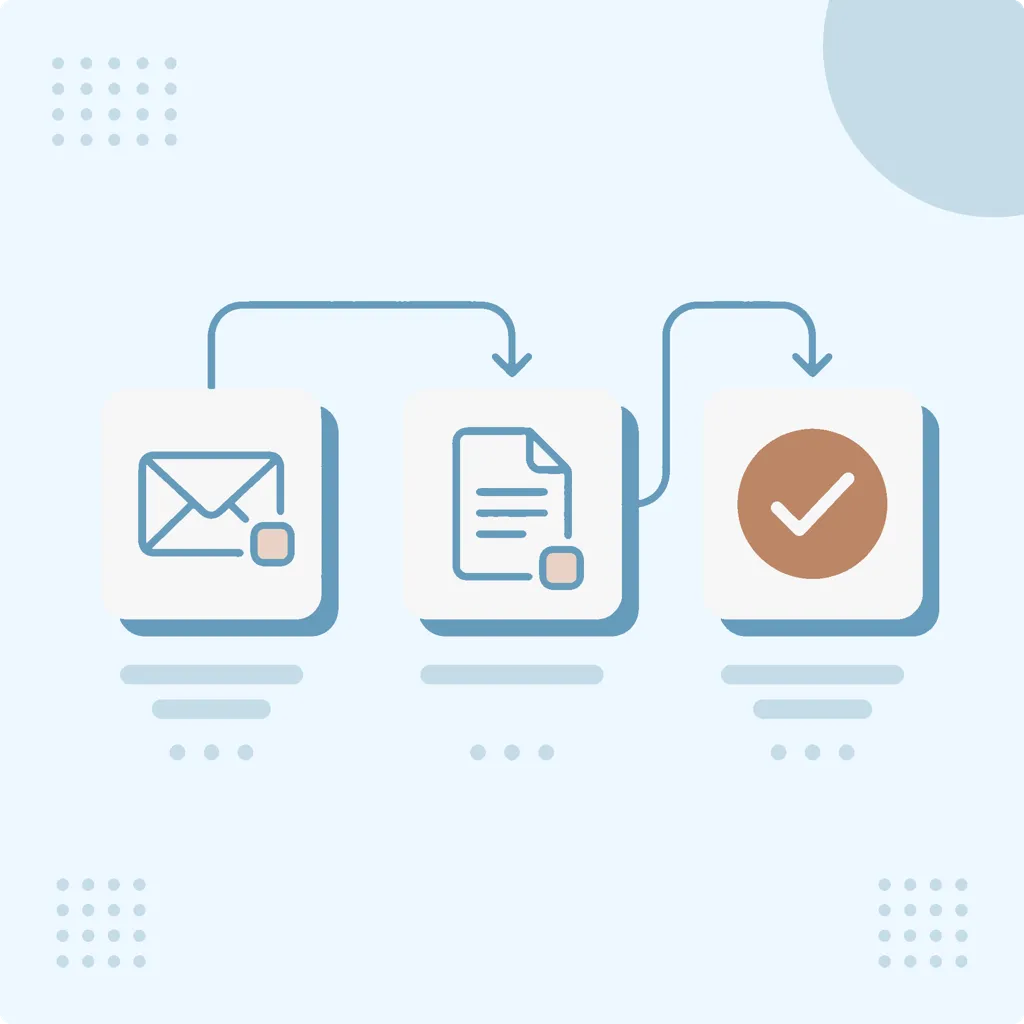
The difference with individual use: the result is the same for everyone, it is measurable (number of requests handled, response time) and it does not depend on each person's goodwill. That is exactly what an approach to process automation with AI offers: start from a repetitive task, map it, then make it run on its own.
Frequently asked questions
Should we ban ChatGPT for the team in the meantime?
No. Individual use is a good starting point: it shows where AI really helps. Just set two simple rules: do not paste personal or confidential data into it without an approved tool, and write down the tasks where it saves time. That list becomes your list of processes to automate.
Can a small business automate without a developer?
Yes. Today's automation tools connect your software (email, calendar, invoicing, CRM) without writing code. What matters is describing the process properly before building it. For the budget, our article on the price of an automation gives the ranges seen in Belgium.
How do you know whether an automation pays off?
Multiply how often the task happens by the time it takes and by the hourly cost of the person doing it. A fifteen-minute task repeated ten times a week adds up to more than a hundred hours a year. Then compare that figure with the set-up and subscription costs.
Priority action plan
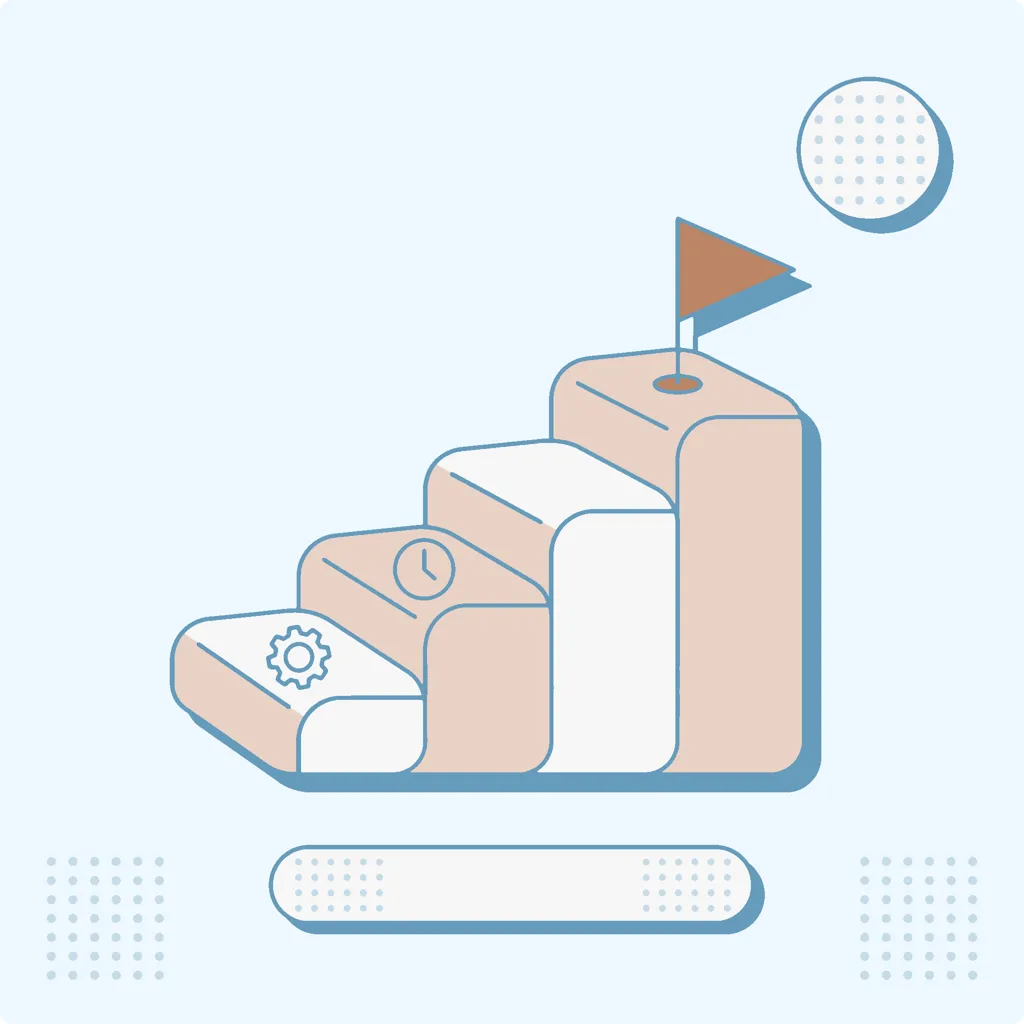
- List current uses: ask each employee which tasks they already use AI for, and how much time those tasks take.
- Pick a single task: frequent, repetitive, with a clear input and output (a request, an invoice, meeting notes).
- Map it: who does what, in which tool, and where information is copied by hand.
- Automate and measure: set up the flow, then track the time saved for a month before moving on to the next task.
AI is already in your teams. The next step is not adding one more tool, it is making it work for the whole business, one task at a time.
Want to know which task to automate first in your SME? We help you spot it and make it run on its own.